What Is the Star of David? Meaning, Origins, and Symbolism Explained
The Star of David, also known as the Six-Pointed Star or Magen David, is one of the most recognizable symbols in the world. Strongly associated with Judaism and Jewish identity, this ancient geometric symbol carries layers of historical, spiritual, and philosophical meaning that extend far beyond religion. Across cultures and centuries, the Star of David has represented protection, balance, unity, and the connection between the material and spiritual worlds.
What Is the Star of David?
The Star of David is a hexagram formed by two overlapping equilateral triangles, one pointing upward and the other pointing downward. This symmetrical geometric structure creates six outer points and a central hexagon. In Hebrew, the symbol is called Magen David, which translates to “Shield of David,” reflecting its traditional association with protection and divine guardianship.
Origin and Historical Background
The exact origin of the Star of David is not definitively known. Archaeological evidence shows that the hexagram appeared in various ancient civilizations long before it became a specifically Jewish symbol.
Variations of the six-pointed star have been found in Mesopotamian artifacts, Byzantine mosaics, Roman architecture, Hindu yantras, and medieval Islamic and Christian art. This widespread presence suggests that the symbol originally carried universal meanings related to cosmic order, balance, and sacred geometry.
A later tradition links the symbol to King David of Israel. According to legend, the design appeared on his shield and was believed to offer divine protection in battle. While this story is symbolic rather than historically verified, it contributed significantly to the name and spiritual identity of the symbol.
+ Read More: Yin Yang Symbol Meaning: What Balance Truly Means in Spiritual Life
The Star of David in Judaism
The Star of David became widely associated with Judaism during the Middle Ages, particularly in Europe. Over time, it evolved into a powerful emblem of Jewish faith, community, and identity. It began to appear on synagogues, manuscripts, tombstones, and religious objects, eventually becoming one of the most recognizable symbols of Judaism worldwide.
In Jewish symbolism, the six points of the star are often interpreted as representing the six directions of space: north, south, east, west, up, and down. This reflects the idea that the presence of God extends in all directions and dimensions. Including the center, the symbol forms seven elements, a number traditionally associated with spiritual completeness and holiness, echoing concepts such as the seven days of creation and the seven-branched Menorah.
Spiritual and Esoteric Symbolism
One of the most profound interpretations of the Star of David is its representation of the union of opposites. The upward-pointing triangle is commonly associated with masculine energy, fire, heaven, and the spiritual realm. The downward-pointing triangle is linked to feminine energy, water, earth, and the material world. Their intersection symbolizes harmony, balance, and integration, suggesting the unity between spirit and matter.
The star is also understood as a visual expression of the connection between heaven and earth. Spiritual energy descends while human consciousness ascends, meeting at the center. This balance makes the hexagram a powerful symbol in mystical and esoteric traditions, where it represents inner alignment and cosmic order.
Interpretations in Other Traditions
Beyond Judaism, the Star of David appears in multiple religious and philosophical systems. In Christianity, it is sometimes linked to Jesus Christ as a descendant of King David and interpreted as a symbol of divine order and sacred geometry.
In Hinduism, a similar hexagram is associated with the Anahata, or heart chakra, symbolizing balance, love, and the union of masculine and feminine energies. Some interpretations connect its points to the Hindu trinity of Brahma, Vishnu, and Shiva.
In Freemasonry, the Star of David represents wisdom, harmony, protection, and the balance between spiritual knowledge and earthly existence. In Afro-Brazilian traditions such as Umbanda, the six points are sometimes associated with different orixás, emphasizing spiritual protection and cosmic equilibrium.
Is the Star of David a Catholic Symbol?
The Star of David is not traditionally considered a Catholic symbol. While it does appear occasionally in Christian art and architecture, especially during the medieval period, its presence is symbolic rather than doctrinal. In Christianity, the star has sometimes been interpreted as a reference to Jesus Christ’s lineage from King David or as a representation of divine order through sacred geometry.
However, it has never held an official or central role within Catholic theology or liturgy. In contrast, the Star of David became a defining symbol of Jewish identity much later in history and remains primarily associated with Judaism rather than Catholicism.
What Does It Mean If Someone Is Wearing a Star of David?
When someone wears a Star of David, it most commonly signifies a connection to Jewish identity, heritage, or faith. For many, it is an expression of religious belief, cultural belonging, or solidarity with the Jewish people.
Beyond its religious meaning, some individuals wear the Star of David for its spiritual or philosophical symbolism, such as balance, unity, and the integration of opposites. In certain contexts, it may also represent remembrance, resilience, and historical awareness, particularly in relation to Jewish history and survival. The meaning ultimately depends on the wearer’s personal, cultural, or spiritual perspective.
What Does the Star of David Protect Against?
Traditionally, the Star of David is viewed as a symbol of protection. The name Magen David translates to “Shield of David,” reinforcing the idea of spiritual defense and divine safeguarding.
In mystical and esoteric interpretations, the symbol is believed to protect against negative energies, chaos, and spiritual imbalance. Its geometric structure, formed by the union of opposing forces, is thought to create harmony and stability, acting as a protective barrier for both the mind and spirit.
While these protective qualities are symbolic rather than literal, the Star of David continues to be worn and displayed as a sign of spiritual strength, guidance, and inner balance.
+ Related:
The Star of David in Modern History
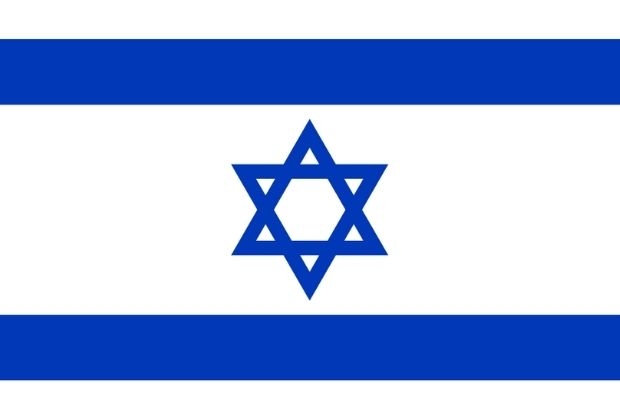
In the late nineteenth century, the Star of David was adopted as a central symbol of the Zionist movement, representing Jewish unity and the aspiration for a national homeland. In 1948, it was placed at the center of the flag of Israel, where it remains today as a national and cultural emblem.
During the Holocaust, Jews were forced by the Nazi regime to wear a yellow Star of David as a means of identification and persecution. This tragic chapter profoundly altered the emotional weight of the symbol, transforming it into a lasting reminder of suffering, resilience, and survival. Today, it also stands as a symbol of remembrance and resistance against hatred and discrimination.
Meaning of the Star of David Today
In contemporary society, the Star of David carries multiple layers of meaning. It represents Jewish identity and heritage, spiritual protection, balance and harmony, unity of opposites, and the continuity of faith across generations. It is widely used in jewelry, art, architecture, and spiritual practices, recognized globally as a symbol with deep historical and metaphysical significance.
Conclusion
The Star of David is far more than a religious emblem. It is a universal geometric symbol that transcends cultures, religions, and historical periods. Through its perfect symmetry and layered meanings, it expresses protection, balance, unity, and the eternal connection between the spiritual and material worlds. Its enduring presence across civilizations highlights its power as a symbol of identity, harmony, and spiritual reflection.



Pingback: What Does 44 Mean Spiritually? A Clear Guide to Master-Number Messages - Insteresting4you
Pingback: What Is the Tree of Life Symbol? Discover the Meaning, Origins, and Spiritual Significance - Insteresting4you
Pingback: 5 Jewish Symbols and What They Mean (A simple, meaningful guide) - Insteresting4you