
The 5 Most Important Buddhist Symbols and Their Meanings
Buddhism is rich in symbolism, using visual elements to express deep spiritual truths, philosophical teachings, and stages of the path to enlightenment. Buddhist symbols are not merely decorative; they serve as tools for meditation, reminders of ethical principles, and representations of the Buddha’s teachings.
Understanding these symbols helps clarify core Buddhist concepts such as impermanence, compassion, wisdom, and liberation. Below are the 5 most important Buddhist symbols and their meanings.
1. The Dharma Wheel (Dharmachakra)
The Dharma Wheel is one of the oldest and most significant symbols in Buddhism. It represents the Buddha’s teachings, known as the Dharma, and the path that leads to enlightenment. Traditionally, the wheel has eight spokes, symbolizing the Noble Eightfold Path, which guides practitioners toward right understanding, intention, speech, action, livelihood, effort, mindfulness, and concentration.

The circular shape of the wheel reflects completeness and the continuous cycle of learning, practice, and awakening. The Dharma Wheel also represents movement, reminding followers that spiritual growth requires constant effort and progression.
+ Read More: What Does the Floral Symbol in Buddhist Art Mean?
2. The Lotus Flower
The lotus flower is a powerful symbol of purity, enlightenment, and spiritual rebirth. It grows in muddy water yet rises above the surface to bloom beautifully, untouched by the impurities below.

In Buddhism, this represents the human ability to overcome suffering, ignorance, and desire to reach enlightenment. Different colors of the lotus carry additional meanings. The white lotus symbolizes purity of mind and spirit, the pink lotus is associated with the historical Buddha, and the blue lotus represents wisdom and knowledge. The lotus teaches that enlightenment is possible regardless of one’s circumstances.
3. The Endless Knot
The Endless Knot, also known as the Eternal Knot, symbolizes the interconnectedness of all things. Its intricate, looping design has no beginning or end, reflecting the Buddhist understanding of dependent origination, where all phenomena arise due to interconnected causes and conditions.

The symbol also represents the unity of wisdom and compassion, as well as the infinite nature of the Buddha’s teachings. The Endless Knot serves as a reminder that actions have consequences and that all beings are bound together through cause and effect.
4. The Buddha Image
The image of the Buddha is one of the most recognizable symbols of Buddhism. Rather than representing a god, the Buddha image symbolizes enlightenment, inner peace, and the potential for awakening within every individual.
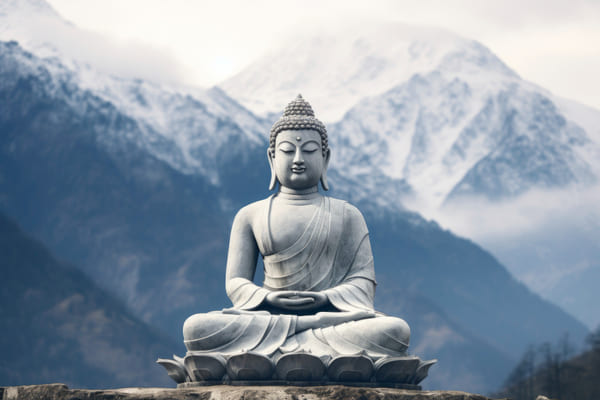
Different postures, known as mudras, convey specific meanings. For example, the seated Buddha in meditation posture represents concentration and inner calm, while the Buddha touching the earth signifies the moment of enlightenment.
The Buddha image serves as a visual reminder of mindfulness, compassion, and the path toward liberation from suffering.
5. The Bodhi Tree
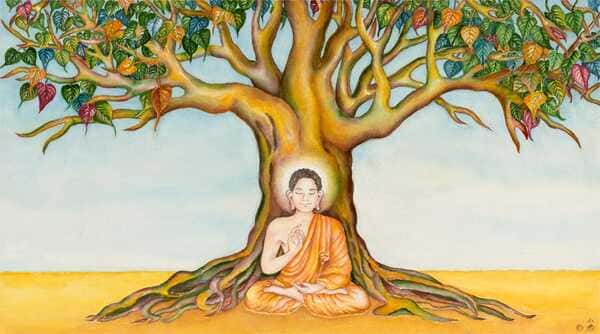
The Bodhi Tree holds great significance in Buddhism as the place where Siddhartha Gautama attained enlightenment and became the Buddha. As a symbol, the Bodhi Tree represents awakening, wisdom, and spiritual realization.
Its deep roots signify stability and grounding, while its spreading branches represent growth and expansion of consciousness. The Bodhi Tree reminds practitioners that enlightenment arises from patience, discipline, and deep contemplation, rooted firmly in awareness and ethical living.
Conclusion
5 most important Buddhist symbols offer profound insights into the teachings and values of Buddhism. The Dharma Wheel emphasizes the path to enlightenment, the lotus flower reflects spiritual purity, the Endless Knot illustrates interconnectedness, the Buddha image embodies awakening, and the Bodhi Tree represents realization and wisdom.
Together, these symbols serve as visual guides on the spiritual journey, helping practitioners and learners alike understand the principles of compassion, mindfulness, and liberation. By exploring their meanings, one gains a deeper appreciation of Buddhism as both a philosophy and a way of life.



Pingback: What Does 44 Mean Spiritually? A Clear Guide to Master-Number Messages - Insteresting4you
Pingback: Rapid Moon Formation Model Sparks Discussions Around Biblical Account - Insteresting4you