What Does the Floral Symbol in Buddhist Art Mean? Everything You Need to Know
The floral symbol in Buddhist art plays a central role in expressing spiritual teachings, impermanence, and the path to enlightenment. Flowers appear frequently in Buddhist imagery, temple decorations, paintings, and sculptures, serving as visual metaphors for inner transformation and awakened consciousness. Understanding the floral symbol in Buddhist art allows deeper insight into how Buddhist philosophy communicates complex ideas through simple, natural forms.
Rather than being purely decorative, floral imagery in Buddhism carries layered meanings connected to wisdom, purity, compassion, and the transient nature of existence. Each flower depicted in Buddhist art reflects a spiritual lesson meant to guide practitioners on the path toward liberation.
The Spiritual Meaning of Floral Symbols in Buddhist Art
At a spiritual level, the floral symbol in Buddhist art represents the unfolding of enlightenment. Just as a flower grows from a seed, emerges from the soil, and eventually blooms, human consciousness evolves through discipline, awareness, and wisdom. This symbolism reinforces the idea that awakening is a gradual and natural process.
Flowers also serve as reminders of impermanence, a fundamental teaching in Buddhism. Their beauty is temporary, and their eventual decay reflects the truth that all conditioned things are transient. By contemplating floral symbols, practitioners are encouraged to detach from material desires and cultivate mindfulness of the present moment.
The Lotus as the Most Important Floral Symbol in Buddhist Art
Among all floral symbols in Buddhist art, the lotus flower holds the most profound significance. The lotus grows in muddy water yet rises above the surface to bloom in purity and beauty. This makes it a powerful symbol of spiritual awakening, representing the ability to transcend suffering and ignorance.
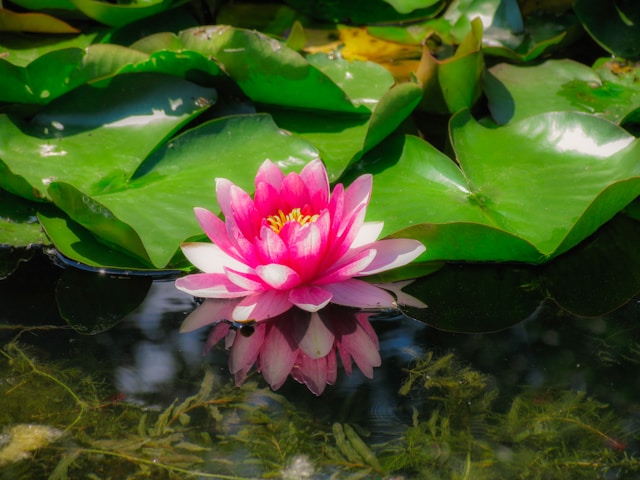
In Buddhist iconography, the Buddha is often depicted seated or standing on a lotus throne. This imagery emphasizes purity of mind and liberation from worldly attachments. Different colors of lotus flowers also carry specific meanings, such as the white lotus symbolizing mental purity and the pink lotus representing the historical Buddha himself.
Other Floral Symbols Commonly Found in Buddhist Art
While the lotus dominates Buddhist symbolism, other floral motifs also appear throughout Buddhist art. The chrysanthemum, for example, symbolizes longevity and endurance, reflecting spiritual perseverance. The peony may represent abundance and honor, especially in East Asian Buddhist traditions.
These floral symbols in Buddhist art often appear in mandalas, murals, and ritual objects, reinforcing teachings about harmony, balance, and interconnectedness. Each flower contributes to a visual language that communicates spiritual values without the need for words.
Floral Symbolism and the Concept of Impermanence
A recurring theme associated with the floral symbol in Buddhist art is impermanence, or anicca. Flowers bloom briefly and then wither, mirroring the fleeting nature of human life and experiences. This symbolism encourages acceptance of change and release of attachment.
In Buddhist practice, offerings of fresh flowers at temples serve as daily reminders of this truth. As flowers fade, practitioners reflect on the importance of living mindfully and cultivating compassion rather than clinging to temporary pleasures.
+ Related Topic:
Floral Symbols in Buddhist Mandalas and Sacred Geometry
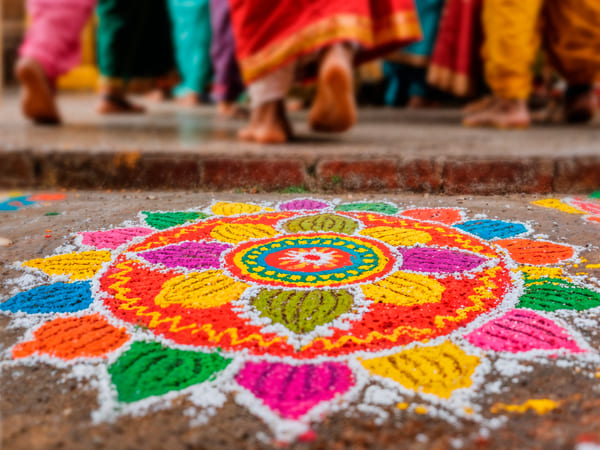
Mandalas frequently incorporate floral patterns as central elements of spiritual design. In this context, the floral symbol in Buddhist art represents cosmic order and the unfolding of the universe from a central point of awareness. Petals arranged in symmetrical patterns symbolize layers of consciousness and stages of enlightenment.
The use of floral geometry in mandalas helps practitioners focus during meditation. The repetitive, balanced forms guide the mind toward stillness, clarity, and insight, reinforcing the transformative power of visual symbolism in Buddhist art.
Cultural Variations of Floral Symbols in Buddhist Art
The interpretation of floral symbols in Buddhist art varies across cultures. In Tibetan Buddhism, floral motifs often appear in vibrant colors and elaborate patterns, reflecting esoteric teachings and ritual symbolism. In Japanese Zen art, floral imagery is more minimal, emphasizing simplicity and impermanence.
Despite these stylistic differences, the core meaning remains consistent. Across traditions, the floral symbol in Buddhist art continues to express purity, spiritual growth, and the journey from ignorance to enlightenment.
Why Flowers Are Central to Buddhist Visual Language
Flowers are universally understood symbols of life, growth, and beauty, making them ideal tools for spiritual communication. In Buddhism, the floral symbol bridges the natural world and inner awakening, reminding practitioners that enlightenment is attainable within everyday life.
By using flowers as symbols, Buddhist art conveys profound truths in an accessible way. The floral symbol in Buddhist art teaches that even amid suffering and uncertainty, transformation and wisdom can emerge naturally.
+ Read More:
The Deeper Message of Floral Symbols in Buddhist Art
The floral symbol in Buddhist art is far more than an artistic motif. It is a visual teaching that reflects the essence of Buddhist philosophy—impermanence, purity, compassion, and awakening. Through flowers, Buddhist art communicates the journey of the soul toward enlightenment in a way that transcends language and culture.
By contemplating floral symbols, one gains not only aesthetic appreciation but also spiritual insight. The floral symbol in Buddhist art ultimately reminds us that growth is possible, beauty can arise from hardship, and enlightenment unfolds naturally when nurtured with awareness and wisdom.
FAQ – Floral Symbol in Buddhist Art
What is the symbol of the flower in Buddhism?
In Buddhism, the flower symbolizes purity, spiritual growth, and impermanence. It represents the mind’s ability to rise above suffering and worldly attachments, just as a flower blooms clean and beautiful even when growing from muddy conditions.
What is a sacred flower in Buddhism?
The most sacred flower in Buddhism is the lotus. It is the primary floral symbol in Buddhist art and represents enlightenment, purity of mind, and liberation from ignorance. The lotus is closely associated with the Buddha and his teachings.
Does floral symbolism differ across Buddhist traditions?
Yes, floral symbolism can vary across Buddhist traditions and cultures. While the lotus remains central, Tibetan Buddhism often uses more elaborate floral imagery in mandalas, whereas Zen Buddhism favors minimal and simple floral forms. Despite visual differences, the spiritual meaning remains consistent.
What is the Buddha’s favorite flower?
There is no historical record of the Buddha having a favorite flower. However, the lotus is symbolically associated with him in Buddhist art because it represents enlightenment, wisdom, and spiritual purity, not personal preference.
What does offering flowers symbolize in Buddhism?
Offering flowers in Buddhism symbolizes respect, devotion, and mindfulness. It also serves as a reminder of impermanence, as flowers quickly fade, teaching practitioners to let go of attachment and appreciate the present moment.