
Lunar New Year Traditions: Discover the Cultural Celebrations Worldwide
Lunar New Year Traditions are among the most meaningful and enduring cultural celebrations in the world. Rooted in the lunar calendar, this festival marks the beginning of a new year based on the cycles of the moon and is observed primarily across East and Southeast Asia. Although commonly known as Chinese New Year, it is also celebrated as Seollal in Korea, Tết in Vietnam, and under various regional names, each reflecting distinct customs and cultural identities.
At its essence, Lunar New Year represents renewal, transformation, and hope. It is a time to leave behind misfortune, honor ancestors, and welcome prosperity, health, and harmony. The celebration blends ancient beliefs, mythology, and social values, making Lunar New Year Traditions deeply symbolic and emotionally significant for millions of people around the globe.
As global awareness grows, Lunar New Year Traditions have expanded beyond Asia, becoming an important multicultural event celebrated in major cities worldwide. This global recognition reinforces cultural preservation while encouraging cross-cultural understanding and appreciation.
Origins and Cultural Significance of Lunar New Year Traditions
The origins of Lunar New Year Traditions date back thousands of years, closely tied to agricultural cycles and seasonal change. Historically, the festival marked the end of winter and the arrival of spring, symbolizing rebirth and new beginnings. Ancient communities used this time to pray for favorable weather, good harvests, and protection from evil spirits.
Central to Lunar New Year Traditions is the concept of good fortune and balance. Many rituals are designed to align individuals and families with positive energy for the coming year. Zodiac signs, based on a twelve-year cycle, also play a vital role, influencing beliefs around personality traits, compatibility, and destiny.
Honoring ancestors is another key aspect. Through offerings, rituals, and remembrance, families show gratitude and respect for those who came before them. This practice reinforces continuity, identity, and the belief that ancestral blessings influence future success.
+ Read More: Yin Yang Symbol Meaning: What Balance Truly Means in Spiritual Life
Essential Lunar New Year Traditions and Customs
One of the most important Lunar New Year Traditions is the family reunion dinner, typically held on New Year’s Eve. This gathering emphasizes unity, respect for elders, and emotional connection. Regardless of distance, families prioritize coming together, highlighting the cultural importance of family bonds.
Another widely practiced custom is pre-new-year house cleaning, symbolizing the removal of bad luck, stagnant energy, and misfortune from the previous year. Once the new year begins, sweeping and cleaning are avoided to prevent driving away good fortune. These symbolic practices demonstrate how Lunar New Year Traditions intertwine daily life with spiritual beliefs.
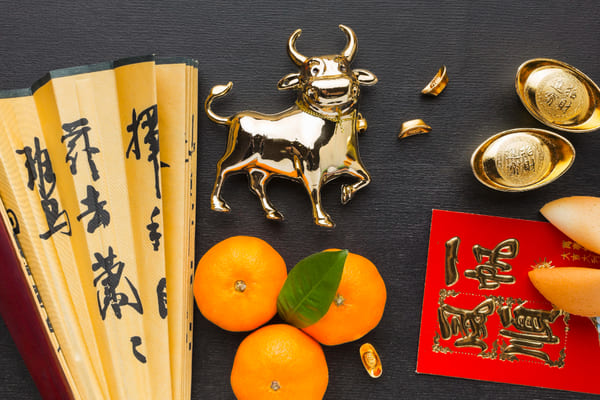
Decorations play a major role as well. Homes and streets are adorned with red lanterns, couplets, and paper cuttings, as red represents luck, joy, and protection. These visual elements create a vibrant atmosphere filled with optimism and positive intention.
Traditional Foods and Their Symbolic Meanings
Food is a cornerstone of Lunar New Year Traditions, with each dish chosen for its auspicious symbolism. Meals are carefully prepared to represent prosperity, longevity, happiness, and success.
| Traditional Food | Symbolic Meaning |
|---|---|
| Dumplings | Wealth and financial prosperity |
| Fish | Abundance and surplus |
| Long noodles | Longevity and good health |
| Rice cakes | Growth and career success |
| Oranges & Tangerines | Luck and happiness |
These symbolic foods are often shared during family meals, reinforcing unity and continuity. Recipes passed down through generations help preserve cultural heritage and strengthen emotional connections. Beyond symbolism, food enhances the celebratory experience through shared flavors, traditions, and memories.
Performances, Festivities, and Public Celebrations
Public events are a vibrant expression of Lunar New Year Traditions. Lion dances and dragon dances are performed to drive away evil spirits and attract good fortune. These performances are accompanied by rhythmic drums and cymbals, symbolizing strength, courage, and prosperity.
Firecrackers and fireworks are traditionally used to ward off negative energy and welcome the new year with confidence and enthusiasm. Although regulations have limited their use in some regions, their symbolic power remains deeply ingrained in the celebration.
Another popular tradition is the exchange of red envelopes (hongbao) filled with money. Typically given to children and younger relatives, these envelopes symbolize blessings, protection, and good luck, reinforcing generosity and positive intentions.
Lunar New Year Traditions in the Modern World
In the modern era, Lunar New Year Traditions continue to evolve while preserving their core values. Digital red envelopes, virtual celebrations, and social media greetings now complement traditional rituals, allowing global participation while maintaining cultural relevance.
As Lunar New Year gains international recognition, it has become a symbol of cultural diversity and inclusion. Schools, workplaces, and communities worldwide acknowledge the celebration, fostering respect and awareness of lunar calendar traditions.
Ultimately, Lunar New Year Traditions represent more than a festive occasion. They embody universal themes of renewal, family, gratitude, and hope, reminding people across cultures of the power of new beginnings and shared human values.